
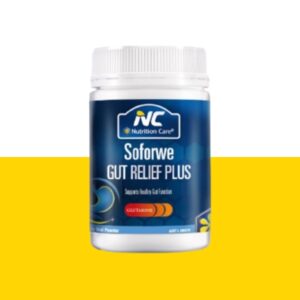
Probiotics and prebiotics delivered as a synbiotic provide a holistic approach to stabilising both the gut microbiota and gut barrier function, influencing physiological processes throughout the body.
The maintenance of healthy populations of microbiota and optimal gut integrity is essential for good health. Disturbing this equilibrium can result in dysbiosis and loss of gut barrier function (leaky gut syndrome), creating disease within and beyond the digestive tract.1, 3, 8
Burgeoning research into the gut microbiome continues to uncover complex relations, including the gut-liver axis, gut-brain axis and gut-lung axis2, 3, supporting the naturopathic philosophy of the gut as “the seat of health”.
What is a synbiotic?
In May 2019, the International Scientific Association for Probiotics and Prebiotics (ISAPP) updated the definition of synbiotic to “a mixture comprising of live microorganisms and substrate(s) selectively utilised by host microorganisms that confers a health benefit on the host”.10
“Host” microorganisms include resident and naturally colonizing microorganisms (autochthonous) and externally applied microorganisms (allochthonous), both of which can be targets for the substrate.10
The most common form of synbiotics is probiotics (live microorganisms) and prebiotics (the substrate). 4,10
A fine line between health and disease
The intestinal barrier is the fine line that separates us from the external world. Everything we ingest comes into contact with this selectively permeable barrier that absorbs nutrients and protects against external factors. It comprises of a mucosal layer, epithelium and immune cells.2, 3
The gut microbiota inhabit the space bounded by the intestinal barrier. The microbiota communicates with the barrier, and this physiological interaction contributes to homeostasis and health.2, 3
Disturbances in gut microbiota and impaired gut barrier function instigate inflammatory changes allowing the passage of inflammatory mediators from the gut into the bloodstream. Research links these disturbances to wide-ranging health conditions, including intestinal bowel diseases, obesity, type 2 diabetes, hepatic steatosis and some types of cancer.1, 2
The advantages of using a synbiotic
Wide-ranging health effects
Synbiotics combine the powerful health effects of probiotics with prebiotics, both of which enhance gut barrier function. Growing research demonstrates synbiotics as a rising therapy in inflammation-related diseases including metabolic diseases.5, 12
Synbiotics have shown numerous beneficial health effects on humans:4, 10, 11
- Enhancing the Lactobacillus and Bifidobacterium genus counts and maintaining healthy microbiota populations
- Increasing the levels of digestive enzymes including lactase, lipase sucrase and isomaltase
- Improving liver function in individuals with cirrhosis
- Reduction of several cardiovascular risk factors and markers of insulin resistance
- Improved immunomodulatory abilities
- Prevention of bacterial translocation and reduction of nosocomial infections following surgical procedures
The health effects of a synbiotic are further determined by the genus and strains of probiotic(s) used in the formulation.
Enhances probiotic survival
The most significant obstacle probiotics face after ingestion is surviving passage through the acidic environment of the upper digestive tract. The addition of prebiotics encapsulates the probiotic microorganisms, nurturing them through the upper digestive tract, increasing their tolerance to oxygen, the acidic pH and body temperature.4
Provides a greater range of effects
The probiotic and prebiotic components of synbiotics target different parts of the intestine. Probiotics are primarily active in the small intestine. In contrast, prebiotics most prominently functions in the large intestine. 4
Increases anti-inflammatory action
Researchers hypothesise that supplementation with synbiotics has a more significant impact on systemic inflammation than prebiotics alone. Together, they demonstrate a superior ability to increase short-chain fatty acid-producing bacteria numbers and reduce C-reactive protein and tumour necrosis factor-alpha concentrations.5
Probiotics
Probiotic microorganisms are the live portion of synbiotics. They function through a variety of processes, including:1, 4, 8
- Modulation of immune function by stimulating phagocytosis and antibody response and downregulating inflammation
- Production of organic acids, reducing intestinal pH, which in turn favours health-promoting microbiota
- Interaction with autochthonous microbiota, supporting their stability
- Inhibiting the production of bacterial toxins
- Competing for space and nutrients, thus resisting pathogenic colonisation
- Enhancing gut barrier integrity and supporting the repair process after damage, boosting mucin production and enzyme synthesis
- Stimulation of systemic hormones and neurochemicals such as cortisol & serotonin
When it comes to supplementation, greater efficacy is evident with multi-strain or multi-species probiotic formulations rather than single strains. Different species and strains confer complementary and synergistic health effects.1, 11
The most common microorganisms in the gastrointestinal tract include Lactobacilli and Bifidobacteria. Administered as probiotics, they have substantial evidence backing their ability to improve the health and stability of gut microbiota and intestinal barrier function.11
Prebiotics
Prebiotics are substrates selectively utilised by host microorganisms to confer a health benefit. Most prebiotics are indigestible plant-derived polysaccharides that are selectively used as substrates within the gastrointestinal tract to grow beneficial microorganisms.7, 8, 11.
Prebiotics perform many functions in the gut. They aid in defence against pathogens, immune modulation, mineral absorption, maintenance of intestinal epithelium and metabolic effects. They also serve to increase satiety and bulk the stool.1, 8, 11
Among the most studied and used prebiotics are FOS (fructooligosaccharides), MOS (mannanoligosaccharides), GOS (galactooligosaccharides), and XOS (xylooligosaccharides).11
These polysaccharides are utilised by gut microbiota to produce organic acids and short-chain fatty acids (SCFAs).
SCFAs function to: 4, 5, 8
- Provide a major source of energy for the intestinal epithelium
- Decrease inflammation in the local area, and potentially systemically
- Lower intestinal pH, inhibiting the growth of pathogenic bacteria
- Maintain the integrity of microvilli, enhance mucin production and generally improve barrier function
- Regulate metabolic pathways locally in the gut, and distally in the liver, adipose tissues, muscles and brain
- Modulate immune function locally and potentially systematically
Focus on FOS
Fructooligosaccharides (FOS) are one of the most widely researched prebiotics. They are metabolised in the cecum to SCFAs, L-lactate and other bioactive molecules with beneficial health effects.9
FOS functions, as described in the previous section, also they: 5, 9, 12
- Enhances the bioavailability of elements essential to human health, and specifically bone mineral retention, including calcium, zinc, manganese, and iron
- Stimulates the selective growth of bifidobacteria and lactobacilli
- Aids in insulin sensitivity and regulation of blood glucose levels
- Inhibits type 2 T helper responses, reducing allergic response
A regular intake of FOS shows positive health effects in: 9, 12
- Gastrointestinal disorders including inflammatory bowel disease
- Obesity
- Osteoporosis
- Atherosclerosis
- Type 2 diabetes
- Atopy in infants and children
Herbal medicines with prebiotic potential
Certain medicinal herbs can modulate gut microbiota, yet this prebiotic potential has yet to be studied in depth. Traditional herbal medicines used as gut demulcents include slippery elm (Ulmus rubra), rich in mucilage, it serves to protect the mucosal barrier.6
Slippery elm is composed largely of polysaccharides, cellulose and lignin with lesser quantities of mucilage, gums and pectins, a carbohydrate profile similar to compounds categorised as prebiotics. Preliminary studies suggest its health benefits are associated with an ability to modulate gut microbiota and improve gut barrier integrity.6
Conclusion
Probiotics and prebiotics work hand in hand as synbiotics. They function as more than a sum of their parts; collectively, they confer health benefits that transcend their individual functions.
In addition to providing holistic, effective treatment for conditions of the gut and beyond, synbiotics are also a foundation supplement for the maintenance of optimal health.
References
- Ashaolu, T.J. (2020). Immune boosting functional foods and their mechanisms: A critical evaluation of probiotics and prebiotics. Biomedicine & Pharmacotherapy, 130, p.110625. doi:10.1016/j.biopha.2020.110625.
- de Vos, W.M., Tilg, H., Van Hul, M. and Cani, P.D. (2022). Gut microbiome and health: mechanistic insights. Gut, 71(5), pp.1020–1032. doi:10.1136/gutjnl-2021-326789.
- Di Tommaso, N., Gasbarrini, A. and Ponziani, F.R. (2021). Intestinal Barrier in Human Health and Disease. International Journal of Environmental Research and Public Health, 18(23), p.12836. doi:10.3390/ijerph182312836.
- Markowiak, P. and Śliżewska, K. (2017). Effects of Probiotics, Prebiotics, and Synbiotics on Human Health. Nutrients, [online] 9(9), p.1021. doi:10.3390/nu9091021.
- McLoughlin, R.F., Berthon, B.S., Jensen, M.E., Baines, K.J. and Wood, L.G. (2017). Short-chain fatty acids, prebiotics, synbiotics, and systemic inflammation: a systematic review and meta-analysis. The American Journal of Clinical Nutrition, p.ajcn156265. doi:10.3945/ajcn.117.156265.
- Peterson, C.T., Sharma, V., Uchitel, S., Denniston, K., Chopra, D., Mills, P.J. and Peterson, S.N. (2018). Prebiotic Potential of Herbal Medicines Used in Digestive Health and Disease. Journal of Alternative and Complementary Medicine, [online] 24(7), pp.656–665. doi:10.1089/acm.2017.0422.
- Rahim, M.A., Saeed, F., Khalid, W., Hussain, M. and Anjum, F.M. (2021). Functional and nutraceutical properties of fructo-oligosaccharides derivatives: a review. International Journal of Food Properties, 24(1), pp.1588–1602. doi:10.1080/10942912.2021.1986520.
- Sanders, M.E., Merenstein, D.J., Reid, G., Gibson, G.R. and Rastall, R.A. (2019). Probiotics and prebiotics in intestinal health and disease: from biology to the clinic. Nature Reviews Gastroenterology & Hepatology, [online] 16. doi:10.1038/s41575-019-0173-3.
- Singh, S.P., Jadaun, J.S., Narnoliya, L.K. and Pandey, A. (2017). Prebiotic Oligosaccharides: Special Focus on Fructooligosaccharides, Its Biosynthesis and Bioactivity. Applied Biochemistry and Biotechnology, 183(2), pp.613–635. doi:10.1007/s12010-017-2605-2